
Today marks one year since the publication of the government-commissioned Rose Review which examined the barriers women in business face and what can be done to overcome them.
The Review was born out of a sense of frustration at the unacceptable disparity which exists between female and male entrepreneurs and the slow progress in closing this gap.
I’ve run my own business as well as worked in the corporate world and in recent years attempted to juggle this alongside bringing up a young family.
And Alison Rose’s finding resonated with me, as it was the barriers I faced in my former corporate world, which directly led to the formation of White Label and, in turn, to one of White Label’s core principles which is to support workplace diversity.
I gave birth to my son in late 2007. Finding a job post-maternity leave during the Great Recession as a senior newspaper executive proved challenging. Time after time, I was told I was ‘second’ choice for a role as they had chosen X or Y as a ‘safe pair of hands’. I was curious about these (male) ‘safe pairs of hands’. It took me a while (and a very helpful conversation with an HR professional) to realise that ‘safe’ in my profession actually meant ‘unlikely to go on maternity again through having a second child’.
I realised that a new approach was needed. I had been working on a freelance basis with Katharine Glass at the Croydon Economic Development Company, and it was clear that the best way forward was for us to start our own company.
White Label was born.
One of the core tenets of White Label remains true today – quality, flexible local jobs for local people. As a newspaper editor, I had always valued my ‘women returner’ employees and often went into battle with senior management to keep them. A little flexibility on my side meant I got experienced, loyal, hard-working employees with fantastic time management skills (all mothers have this) and an improved perspective on our news output, as they frequently had a much better understanding of what our family, community readership wanted to hear about than my young fresh-faced college graduates.
Many of our early recruits at White Label were women – talented, experienced colleagues and working mothers who were in a similar position to ourselves. Today, the picture is a little more balanced with around two thirds of our workforce female but we still maintain a high proportion of flexible workers, both male and female.
The working environment has changed significantly since I first entered it – technologically, as well as in its culture – and it is for the better. I hope that the girls and women entering the world of work today, and in the future, will be able to aim higher and reach further than many of the women of my generation. And I also hope that they will have the skills to ‘fight their corner’ as while our diverse society has overcome many of the battles for equality, relating to gender, age, sexuality and culture, there remains a war to be won.
What the Rose Review did so well was to lay out the evidence that helping women succeed in businesses is an economic imperative. The prize at stake is significant – representing £250 billion of economic potential for the UK.
In addition, McKinsey’s Delivering through Diversity research showed that the more diverse the team, the more significant the financial outperformance. Brilliant ideas, innovation and implementation come from diversity of thinking. The greater the mix around the table, the richer the perspective. You get better business decisions – more effective, more productive, more profitable – with diversity.
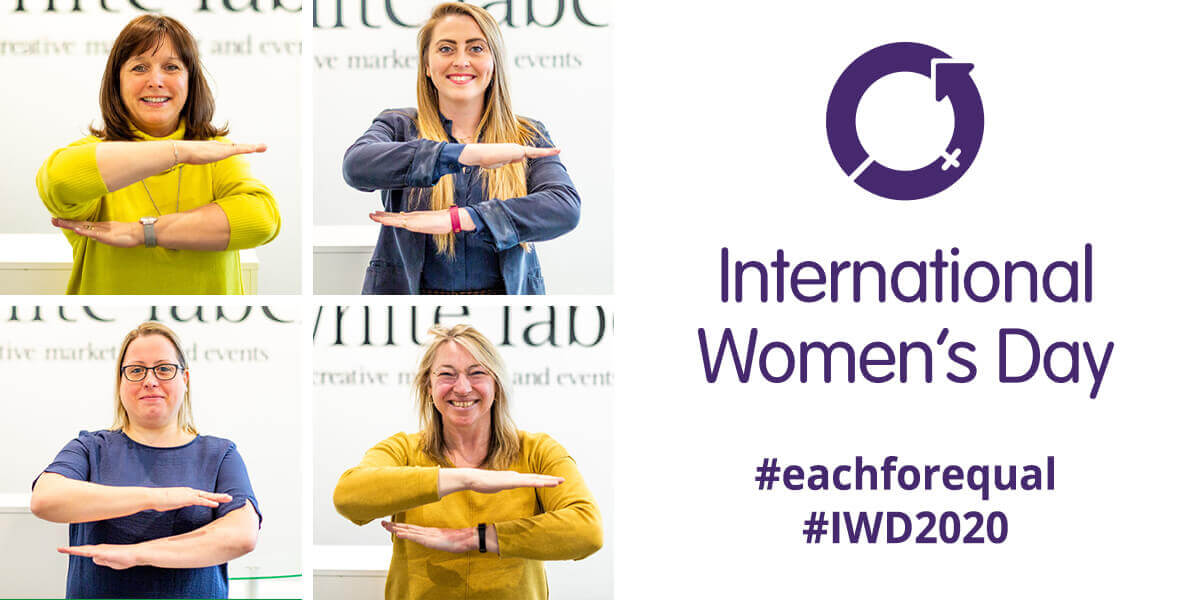
As we approach International Women’s Day, I encourage all business leaders to support the drive for greater workplace diversity – it makes for a better business, as well as a better world to live in.
Join us now in being #EachforEqual.

